


The City of Bones by Cassandra Clare is the first in a six book series, called The Mortal Instruments (Clare 2007). The series title refers to the three instruments that are sacred to the shadowhunters. There is the mortal cup, sword, and mirror which each have their own significant power and ties to the angel Raziel. Shadowhunters, also known as Nephilim, are those with angel blood who have been tasked with protecting the downworlders and mundanes from demons. They’re able to do this through rigorous training and their runes (marks on their skin that give them heightened abilities). Downworlders are half human and half demon, and can be warlocks, vampires, wolves, faeries, etc. All of this is done while keeping the existence of the shadow world a secret from humans.

Image from Freeform. 
Image from Freeform. 
Image from Freeform.
With the first book the focus is on Clary Fray, who was at first though to be a mundane. One night when she goes to a club with her friend she witnesses what she thinks is a brutal murder. It turns out to be a group of shadowhunters fighting a downworlder who was praying on humans and breaking shadow world laws. The catch here is that the hunters were using a rune that keeps them hidden from mundane eyes, so the fact that Clary was able to see them at all was unusual. She runs away and after an event where she comes home to find her mother gone and a demon in her house, she is saved by one of the hunters from the club, Jace.
After bringing her back to the institute, located in an old church where the shadowhunters live and train, it is revealed that Clary herself is a shadowhunter. After some practice it’s clear that she is no ordinary shadowhunter, which is interesting because neither is Jace. He is he best fighter in the shadowhunter ranks. It’s not until the second book that it’s reveled that Clary can create runes. This is unusual because there is the Grey Book, where all the runes to exist are, and that’s what shadowhunters learn and use to operate within the world. No one else can create runes out of nowhere. In a later book it’s revealed that while their mothers were pregnant they were injected with pure angel blood, giving them these special abilities. I only mention these details from other books because it means that the pair are half angels, and it effects how one would read City of Bones, and Clary’s interactions with runes.
The book is really good at introducing the religious themes that playout through the rest of the franchise with an emphasis on runes and symbols, as well as blood and bloodline descendants with the angels, demons, shadowhunters, and downworlders. These details are always highlighted as well in the different iterations of the book and series, like in the movie of the same name (Zwart 2013), and the television show Shadowhunters (Hastings and Decter,2016). I mention these other iterations because a lot of the visuals used in this article are from those sources, as they adequately showcase relevant information and elements from the book.

Image from
Pinterest .
Image from Girlfriends Magazine. 
Image from TeePublic.
The runes are such an important part of the shadowhunters existence as they quite literally are representations of power. They activate a rune every time they need a boost in skill, speed, strength, healing, etc. The manifestation of super human abilities in a symbol has become a common way of distinguishing that one is a shadowhunter. They are covered in these runes from head to toe, it’s a visual representation of who they are and what they believe in. The idea of symbols belonging to a group of people is real, most religions have a set of symbols they’re tied to.
The idea of symbols is that they stand for something, communicate something, and it all just depends on what that symbol looks like. My understanding of what a symbol is a combination of a couple definitions, along the lines of being either a physical or drawn manifestation, word or phrase that gives value and meaning to this object (Dictionary.com 2019).
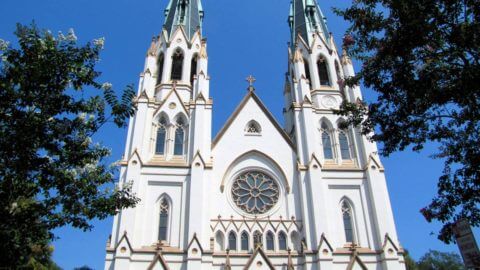
Image from Old Town Trolley Tours 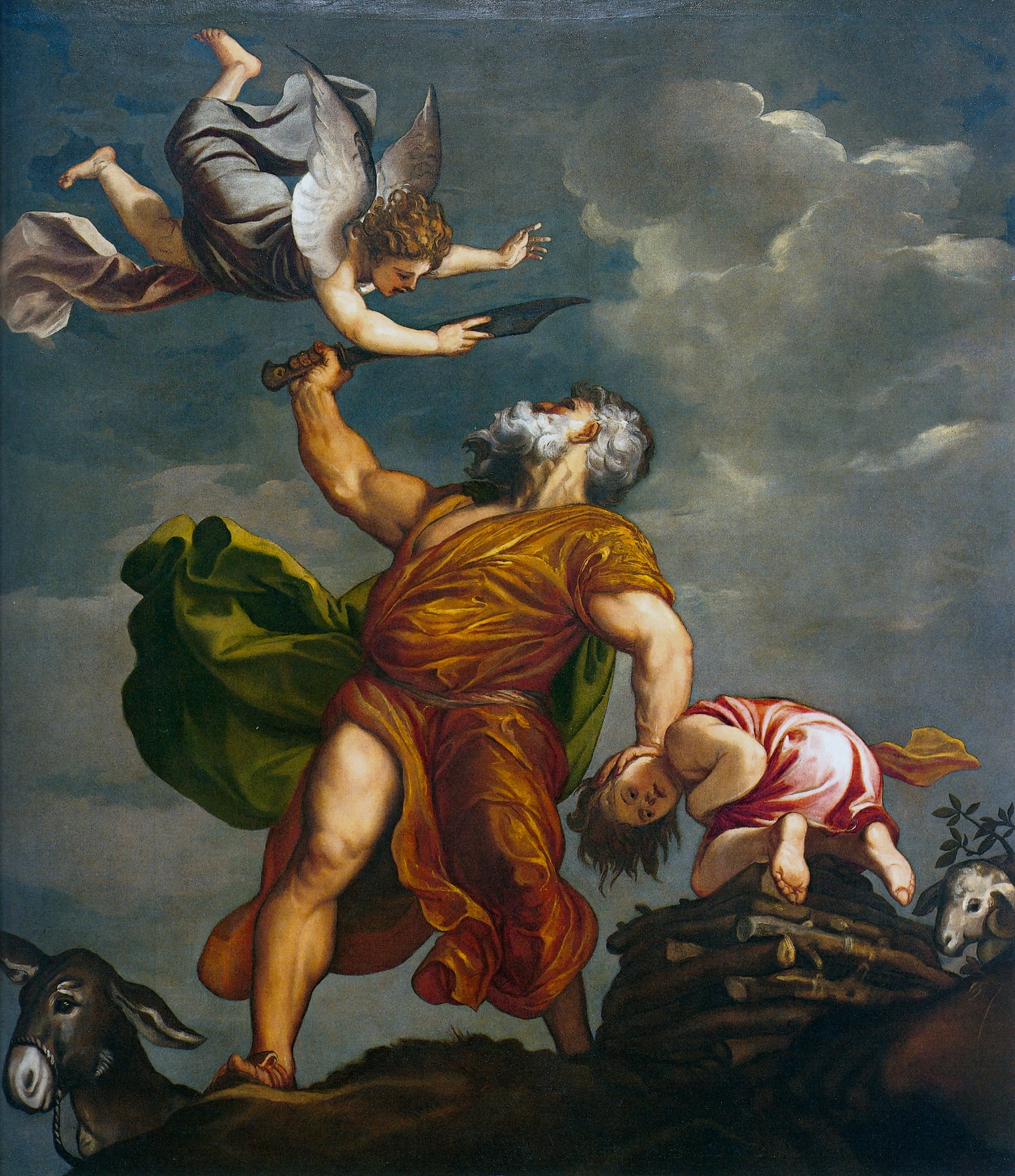
Image from Wikimedia.
Based off of that the first two things that come to mind when viewing things in that way are the symbols on religious buildings and art. They’re a way for a group to distinguish themselves and communicate to others that this is their own space. Churches, cathedrals, mosques, temples, monasteries, the list could go on. This is where people practice their beliefs, and the buildings themselves reflect that. Taking churches for example, now a days for different Christian sects it’s not unusual to find a cross or two on the outside of buildings, whether neatly included within the design or just hanging up. The buildings themselves, some especially used to be built really high to be closer to be closer to where they though heaven was, they really emphasized the vertical elements of the structures (Campbell 2017). So these religious constructions themselves are symbols and embody the beliefs of the people that inhabit them.
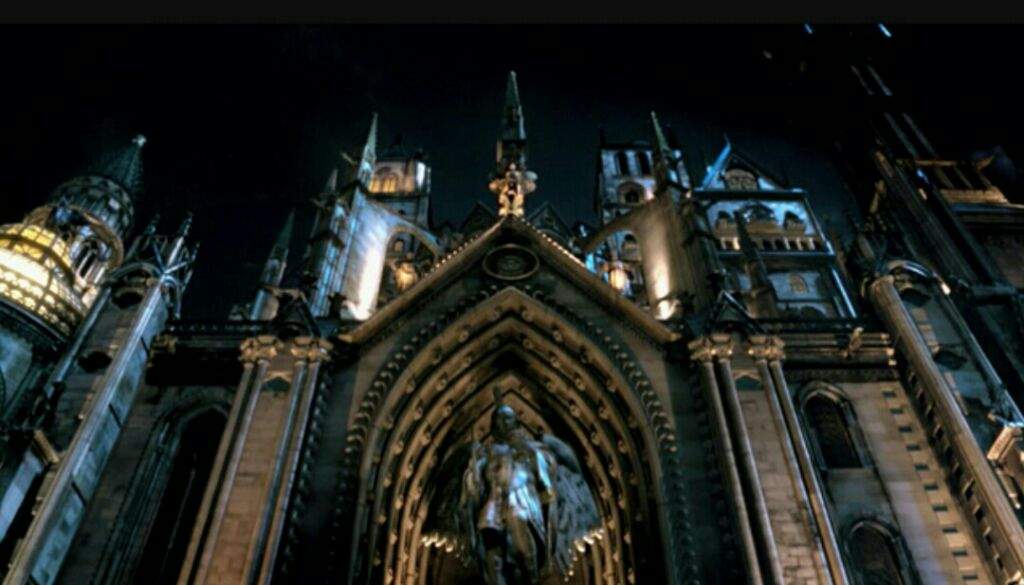
That being said, it’s really fitting that the institute, that’s essentially a headquarters for operation among the shadowhunters is in a church. They’ve taken hold of that space and it’s where they practice their beliefs. Their beliefs that they are supposed to do good and protect people, the beliefs that they have this higher calling to fight evil and demons, the belief that they are descended from angels. This is their own religion and they practice it and spread it in the way of keeping everyone safe through training and knowledge acquisition. Which goes back to their use of runes/symbols to not only mark themselves but empower themselves enough to go out and put their beliefs into action.
“Everything can assume symbolic significance… natural objects like stone, plants, animals, mountains and valleys, sun and moon, wind, water or man made things such as boat, cutlass or even numbers, triangle, cross, are all symbolic…therefore endowing them with great psychological importance and expressing them in both religion and visual art.”
(Ofuafo 2013, 395)
Going back to this idea of art having religious symbolism in it, it’s not uncommon to find different pieces with a symbol or two hidden away. Like mentioned in the above quote, anything can be a symbol. Any part of art, a drawing, painting, can be interpreted as communicating x thing. These pictures can represent many things, they can embody many things and be that physical representation of them. Which brings me to the element of art in the City of Bones. Clary is an artist, as was her mother, and her mother made this hand painted set of tarot cards. One of them in particular was especially striking as it had this beautiful cup. As it turns out this is where her mother hid the mortal cup and Clary, using her special rune creating ability, is the only one who can produce it from this actual painted card. Making this cup on the card not only just a painted symbol like everyone originally thought, but the actual embodiment of the mortal instrument. This tarot card, this piece of art was both a symbol and the real thing, co-existing at the same time.

Image from Freeform. 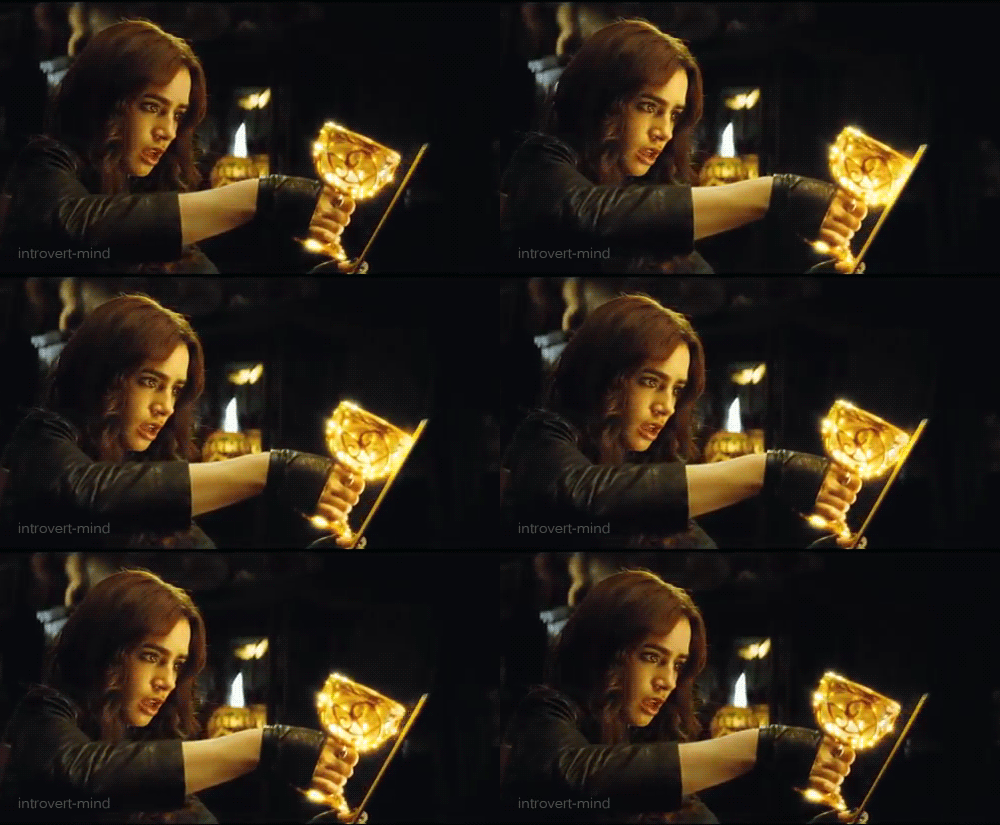
Image from Screen Gems.
Diving further into the realm of symbols and what they could be, provides the opportunity to discuss what blood and bloodlines really stand for. Blood is frequently used as a common representation of either strength or weakness, of power or being powerless, purity or impurity in popular media. In this shadow world there is a heavy emphasis on who has angel blood and who has demon blood. Those with angel blood have an elevated status and a higher purpose, with their abilities viewed as gifts. That is in stark contrast to those with the demon blood and are looked down upon. They are seen as impure because demon blood has contaminated them, even if they have half human or angel blood too. The faeries have half angel and half demon blood but are still classified as lesser. This is really interesting as in the bible the existence of Nephilim is actually due to the fact that fallen angels mingled with humans (Beginning and End 2012). In the cited source it didn’t differentiate the fallen from evil, but means that they didn’t have some divine purpose, and neither would their offspring. The article further goes on to state that the Nephilim were actually causing a lot of trouble and were enemies of that god (Beginning and End 2012).
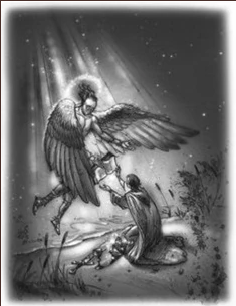
In the shadow world the Nephilim exist because the angel Raziel pours his blood into the mortal cup for the first shadowhunters to drink from to give them half angel blood. This therefore gives them this divine purpose and their abilities. That’s a drastically different take on the concept of Nephilim, what they stand for and how they came to be. Not to mention that again the blood symbolizes this power gain, because it’s “pure”. The idea that blood can make such a drastic change like that is so common in popular media. However, the role that blood and blood rites play isn’t as simple as that. There are a lot of contributing factors especially based on cultural beliefs. Is it purifying, or does it ward off evil? Does it give power, or does it give life? There isn’t really one decided upon answer for that, it is reliant upon so many external factors that there is no concrete answer (McCarthy 1969, 175).
The Mortal Instruments series has many allusion to religious affiliated ideas or symbols without ever really connecting to one religion specifically, it borrows from lore from all over. The first book, City of Bones, is a good introduction into the shadow world where they have created their own lore and take on some of these ideas and concepts. The runes and emphasis on blood is a constant theme throughout the series and is set up in the first book. And while there are many religious like elements one can explore in this shadow world it would be hard to address any of them without first looking at those two because they play such a key part in virtually every interaction the shadowhunters and Clary have. The runes and differentiation between angel and demon blood stand for much more than what appears on the surface. Overall City of Bones opens the door for many discussions in how symbols are vastly present in stories and can allude to many different ideas through a religious disguise.
Bibliography
Clare, Cassandra. City of Bones. Vol. 1. 6 vols. The Mortal Instruments. New York City, NY: Simon & Schuster, 2007.
The Mortal Instruments: City of Bones. Directed by Harald Zwart. Performed by Lily Collins and Jamie Campbell Bower. United States: Screen Gems, 2013. Film.
Shadowhunters. Directed by Matthew Hastings. Written by Ed Decter. Freeform, January 12, 2016.
“The Definition of Symbol.” http://www.dictionary.com. Accessed April 16, 2019. https://www.dictionary.com/browse/symbol.
Campbell, Josephine. “Church (Building).” In Salem Press Encyclopedia. Salem Press, 2017.
Ofuafo, Philomina Uyovwirume1. “Art Symbols as Means of Communicating Religious Concepts in Urhobo Traditional Society.” Journal of International Social Research 6, no. 27 (Summer 2013): 392–97.
“Bloodlines of the Nephilim – A Biblical Study.” Beginning And End, August 26, 2012. https://beginningandend.com/bloodlines-of-the-nephilim-a-biblical-study/.
McCarthy, Dennis J. “The Symbolism of Blood and Sacrifice.” Journal of Biblical Literature 88, no. 2 (1969): 166–76. https://doi.org/10.2307/3262876.
 Religion in Popular Culture Lab